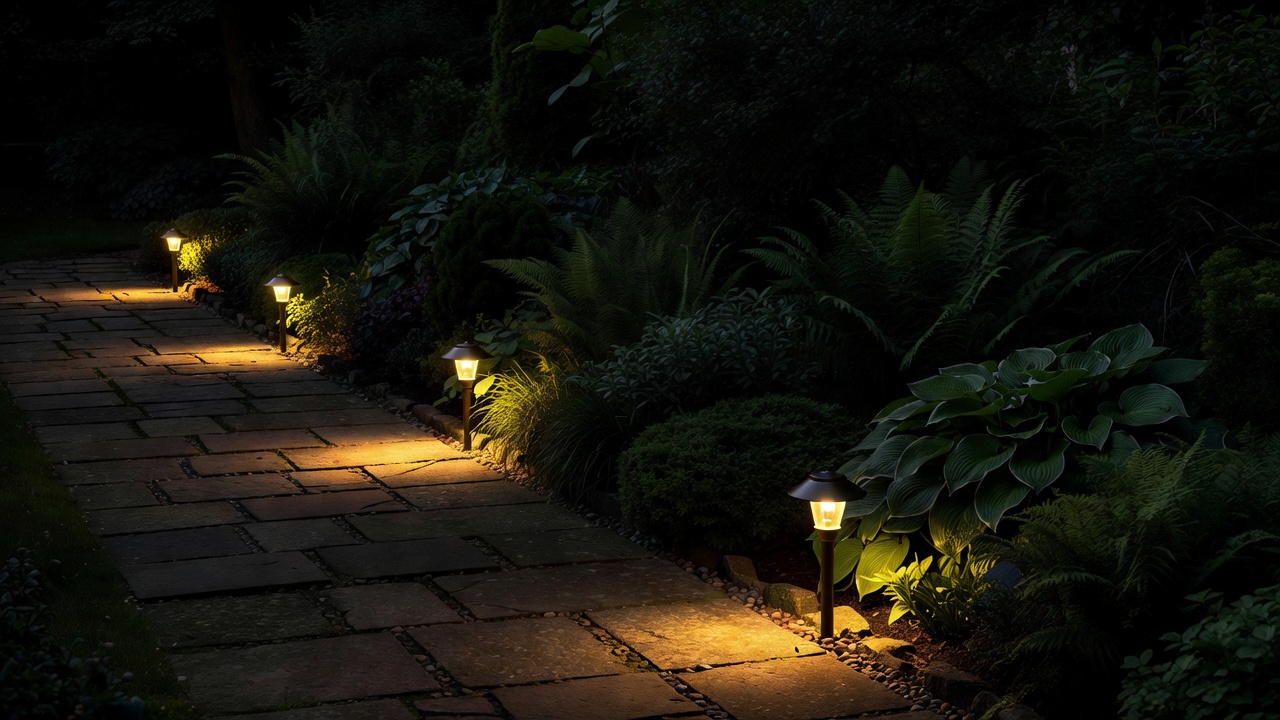
Begin with the places feet need information
Walk from the back door to each seat after dusk, with the main garden lights turned down. Mark the places where a visitor would need clearer information: a step, a turn, the edge of paving or a low threshold. These are the starting points for useful lighting. A string of decorative lamps across the whole garden cannot substitute for seeing the edge of a single unexpected step.
Choose shielded fittings that direct light onto the relevant surface and away from the audience’s eyes. Keep light out of the projector beam and off the screen, where it can reduce contrast. Test the view from a seated position as well as standing. A fitting that seems discreet beside a path may become a bright point directly in somebody’s sightline once they sit down.
Make less light work harder
Separate route lighting from general decorative lighting where practical, so you can keep essential guidance without illuminating the entire garden during the film. Warm-coloured light and a low output can feel comfortable, but colour alone does not make a fitting wildlife-friendly. Direction, duration, location and the species using the space all matter. Avoid upward beams and leave unlit connections between suitable habitats.
Use timers or deliberate switching to end unnecessary illumination after the evening. Motion sensors can be useful in some locations, but sudden bursts of bright light beside the screen may be distracting and can repeatedly disturb wildlife. Consider the likely movement of pets and guests before choosing a sensor’s position. Solar lights vary considerably with season, shading and battery condition, so do not assume they will reliably mark a critical step.
Are fairy lights enough for the route?
They may provide atmosphere but often give poor information about the ground. Check steps and changes of level separately, and only use products rated and installed for their actual outdoor conditions.
For broader principles, consult DarkSky International and the Bat Conservation Trust. Their guidance helps explain why light should be useful, directed and limited. Where protected species may be affected, seek qualified local ecological advice rather than treating a decorative lighting plan as a harmless change.
Let planting frame the experience
Start with the soil, drainage, climate and existing shade, not a shopping list of plants that look dramatic in an evening photograph. The Royal Horticultural Society offers plant profiles that can help check eventual size and growing conditions. Lavandula angustifolia, for example, is generally suited to sunny, freely draining positions; it is not a universal answer for a damp, shaded screening corner.
For moister partial shade, a suitable fern such as Dryopteris filix-mas may be worth investigating where it fits the local climate and planting context. Calamagrostis × acutiflora can offer an upright form in appropriate conditions, but its movement still needs space away from a screen. These are examples to research, not a prescribed planting scheme. Check local invasive-species guidance, toxicity and the needs of children or pets before selecting plants.
Allow for mature spread and ordinary maintenance. Keep thorny stems away from the night-time route, prevent pots from narrowing a turning space and avoid placing equipment in an irrigation zone. Scent can be enjoyable in moderation, but strong fragrance beside a close seating group may not suit every guest. Ask about sensitivities and leave a less enclosed seating option.
Protect roots, neighbours and the darker edge
Do not use trees as convenient attachment points for screens or heavy lighting without appropriate professional assessment. Repeated foot traffic can compact soil around roots, and trenching for cable can cause damage that is not immediately visible. If permanent electrical work or excavation is proposed, involve a competent installer and, where relevant, an arborist. Keep watering arrangements separate from electrical equipment and connections.
Look beyond the fence before settling the lighting. A lamp angled away from your screen may still shine into a neighbour’s bedroom. Move it, shield it or reduce its output rather than assuming a small fitting cannot be intrusive. The RSPB and local wildlife organisations can also provide context for making garden habitats useful beyond the screening itself.
A successful lighting plan is often barely noticed during the film. It becomes useful when someone stands up and follows the route home. Next, check that the equipment position is equally well considered.